What Is Energy Efficiency, Really? A Plain-Language Guide for Every Ratepayer
Energy efficiency explained in plain language. Learn how negawatts, smart upgrades, and building performance can cut your utility bills and reduce waste.
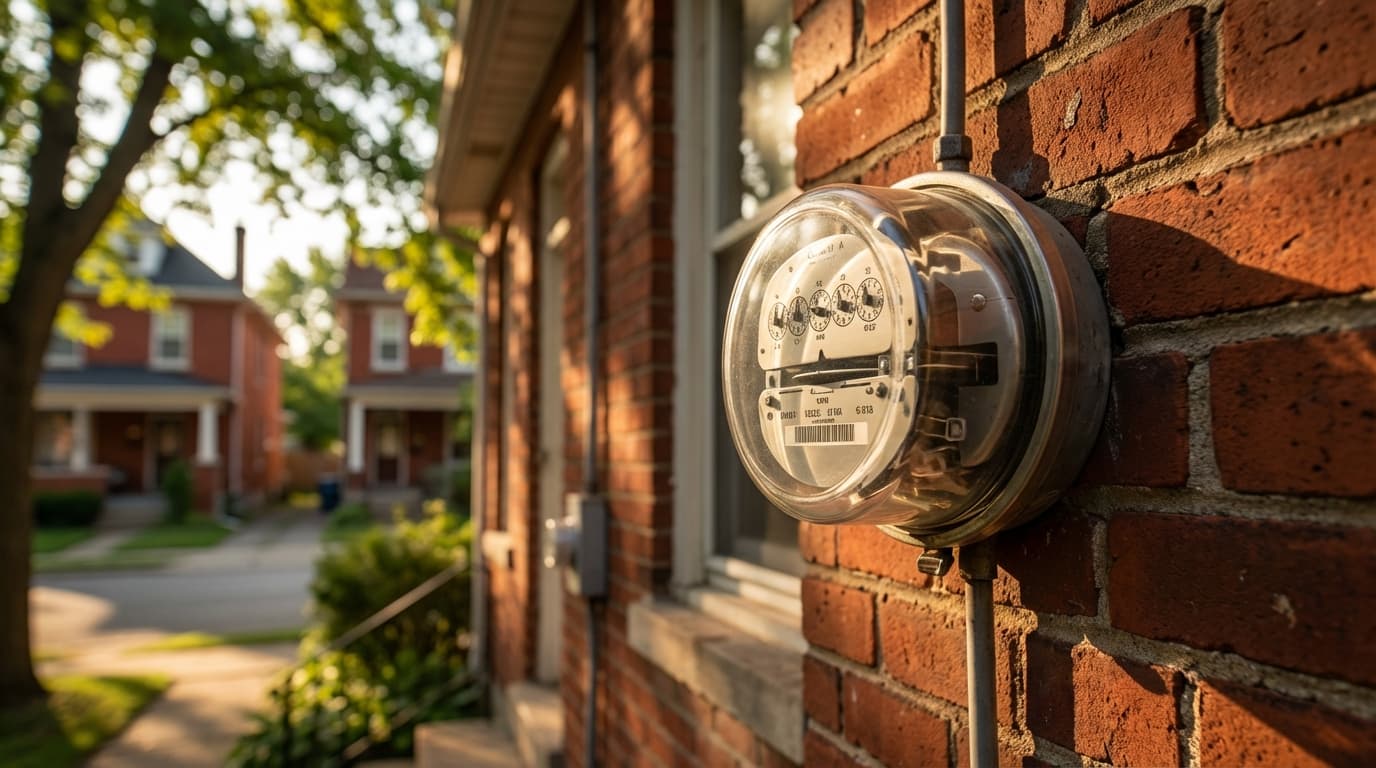
Every building you walk into — your home, your office, the school where your kids learn — is quietly wasting energy. According to the U.S. Environmental Protection Agency, 30% of the energy consumed in commercial buildings is wasted.1 The U.S. Department of Energy estimates that adds up to $150 billion in annual building energy waste nationwide.2 That's not an abstract number. That's money leaving your pocket every single month.
But here's what I want you to understand: this isn't a story about doom. It's a story about untapped potential. Energy efficiency is the single most accessible, most cost-effective tool we have to put money back in people's pockets AND reduce the strain on our shared grid. The opportunity here is extraordinary — if we're willing to look at our buildings differently.
What Is Energy Efficiency?
Energy efficiency is not about doing without. It's not about sitting in the dark or sweating through summer. Energy efficiency means getting the same comfort, light, and convenience you already enjoy while using less energy to deliver it.
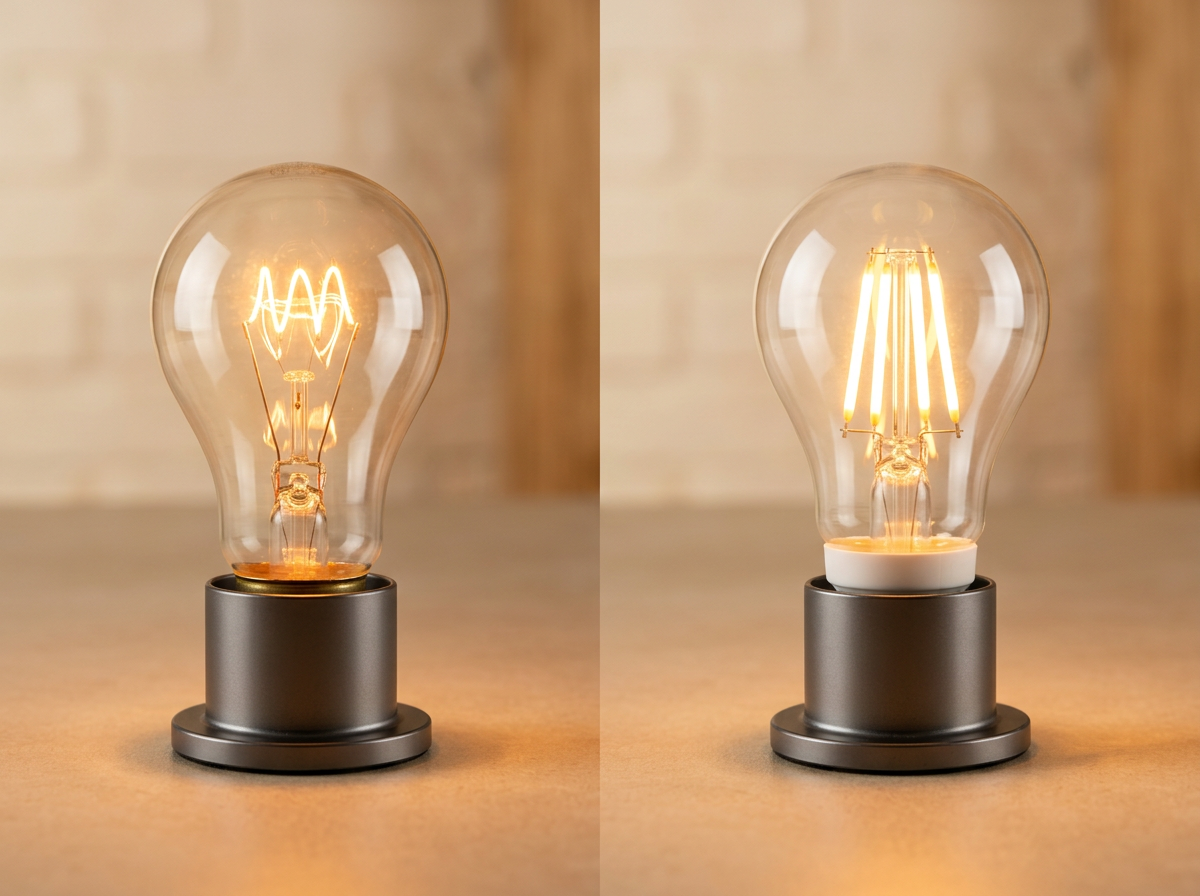
The simplest example is one you've probably already experienced. A traditional 60-watt incandescent bulb and a 10-watt LED produce the same amount of light. Same brightness. Same room. But the LED uses up to 90% less electricity and lasts 25 times longer.3 You didn't sacrifice anything. You just stopped paying for waste.
That's the core idea. Energy efficiency is about performance — doing the same job with fewer resources. It applies to everything from light bulbs to HVAC systems, from windows to water heaters. And it scales from a single fixture in your kitchen all the way up to the national grid.
What Is a Negawatt? The Cheapest Energy You'll Ever Buy
In 1989, physicist and energy strategist Amory Lovins introduced a concept that should have changed everything: the negawatt. A negawatt is a unit of energy saved — a watt you didn't have to generate because you didn't need it in the first place.4
Here's why that matters: generating a kilowatt-hour of electricity requires capital investment in power plants, fuel to burn, transmission infrastructure to deliver it, and ongoing maintenance at every step. A saved kilowatt-hour requires none of that. As Lovins put it, "It is now generally cheaper to save fuel than to burn it."5
Key stat: The cheapest kilowatt-hour is the one you never have to generate. According to the Rocky Mountain Institute, a negawatt costs a fraction of a generated watt, requires zero fuel, and needs no new infrastructure.4
Think about what that means for your household. Every watt you don't waste is functionally identical to a watt your utility didn't have to produce. You save on your bill. The grid faces less strain. No new power plant needed. No new transmission lines. The negawatt is infrastructure AND savings, rolled into one.
From Your Meter to the National Grid
It's easy to think of energy efficiency as a personal concern — your thermostat, your bill. But zoom out. There are roughly 133 million households in the United States.6 The residential sector alone accounts for about 20% of total U.S. energy consumption.7 Your thermostat is part of a system, and that system is enormous.
What happens at the scale of millions of homes has national consequences. When households across the country waste energy, the aggregate effect is staggering. When they get more efficient, the cumulative impact is transformational.
And here's the part most people don't think about: the energy that reaches your meter has already been through a gauntlet of losses. According to Lawrence Livermore National Laboratory's energy flow analysis, the U.S. rejects roughly two-thirds of all primary energy as waste heat — and the electricity sector loses approximately 59% of its input energy before a single electron lights up your living room.8 In transportation, 74% of fossil fuel energy is wasted.8
Key stat: The United States rejects approximately two-thirds of its primary energy as waste, according to Lawrence Livermore National Laboratory. Most of it is lost as heat from burning fossil fuels.8
That means efficiency at the point of use — in your home, in your building — is one of the most powerful leverage points in the entire energy system. Every watt you save at the meter saves multiples upstream.
Where Does the Waste Hide?
Most people don't know where their energy money goes. That's not a failure of character — it's a failure of visibility. Buildings are complex systems, and energy waste tends to hide in plain sight.
Standby power and phantom loads. According to the U.S. Department of Energy, standby power — the electricity consumed by devices that are plugged in but not actively in use — accounts for 5% to 10% of residential electricity consumption.9 The Lawrence Berkeley National Laboratory puts the upper range at about 10% for a typical household.9 That's energy you're paying for while getting absolutely nothing in return.
Heating and cooling losses. Heating and cooling represent about 52% of the average home's energy use.10 Air leaks around windows, doors, and ducts waste 10-20% of that heating and cooling energy.10 Over-conditioned spaces — rooms cooled or heated when nobody's in them — compound the problem.
Aging equipment. An HVAC system that was efficient 15 years ago is hemorrhaging energy today. The same goes for water heaters, refrigerators, and other major appliances that degrade in efficiency over their lifespans.
Lighting that overperforms. If you still have incandescent or even some older CFL fixtures, you're paying a premium for light. Replacing 20 bulbs with LEDs can save approximately $150 per year at current electricity prices.11
The good news? Every one of these problems has a known, proven, cost-effective solution. This isn't theoretical. The tools exist today.
What Energy Efficiency Means for Your Bill
Understanding how your utility charges you is key to understanding why efficiency pays. Many utilities use tiered rate structures, where the price per kilowatt-hour increases as your consumption rises.12 The more you use, the more expensive each additional unit becomes. Energy efficiency keeps you in the cheapest tier.
Other utilities use time-of-use (TOU) pricing, where electricity costs more during peak demand hours and less during off-peak periods.12 Efficiency reduces your overall consumption, and smart energy management helps you shift what's left to the cheapest hours.
Here's the practical math. The average U.S. household pays about $163 per month for electricity, based on an average rate of 18.05 cents per kilowatt-hour and average monthly consumption of 903 kWh.11 Simple efficiency upgrades — LED lighting, a smart thermostat, weatherization, ENERGY STAR appliances — can cut consumption by 15-30%, translating to real savings of $25 to $50 per month. Many of these investments pay for themselves within one to three years.11
Key stat: The average U.S. household spends $163/month on electricity. Simple energy efficiency upgrades can reduce that by 15-30%, with most investments paying for themselves in 1-3 years.11
And here's what makes this even more urgent: Americans are paying roughly 10% more for electricity than they were two years ago.11 Rates are climbing. Efficiency isn't just smart — it's your best hedge against a future of rising energy costs.
Getting Started: The Highest-Impact Moves
You don't need to renovate your entire home to start seeing results. Here are the highest-return moves, ranked by typical payback period:
1. LED lighting retrofits. LEDs use 75% less electricity than incandescents and last up to 25 times longer. A single swap from a 60W incandescent to a 10W LED saves roughly 73 kWh per year at four hours of daily use.3 Payback: often under one year.
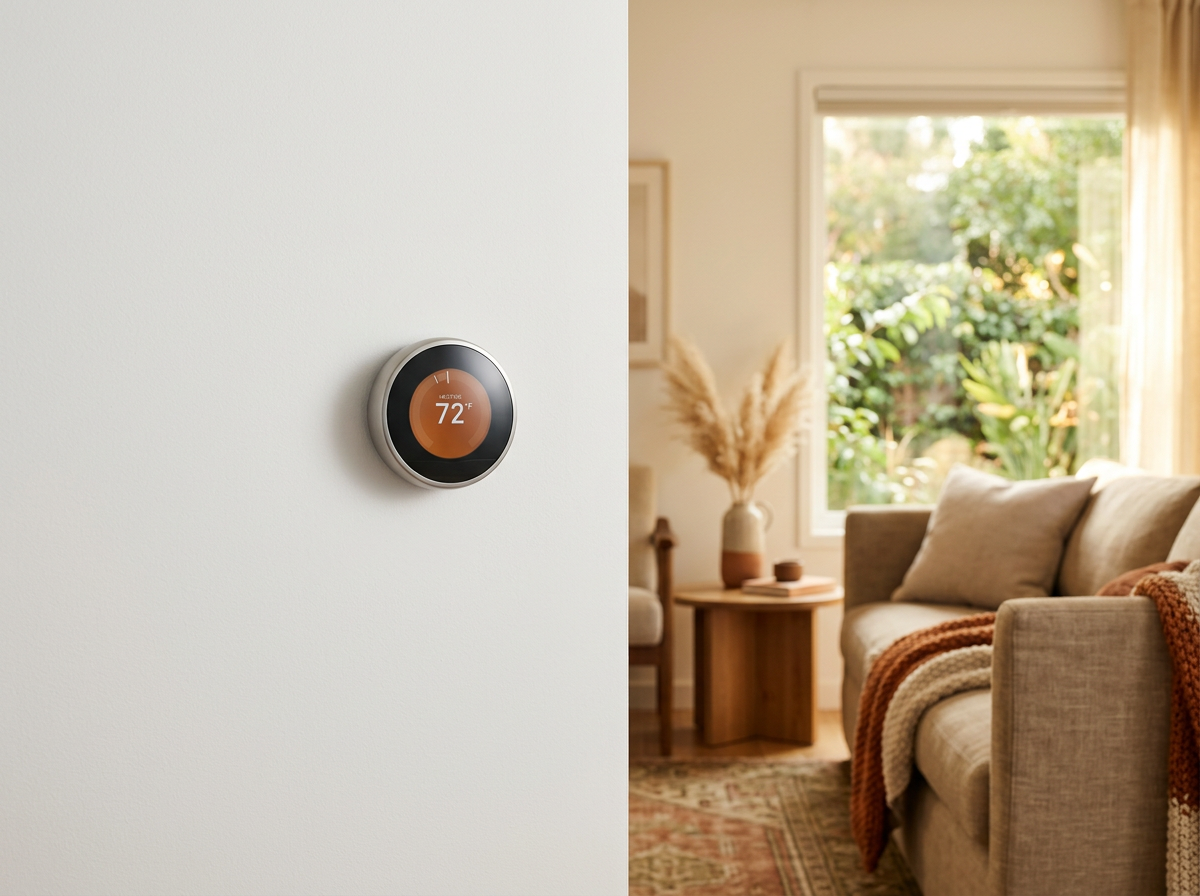
2. Smart thermostat installation. Programmable and smart thermostats reduce HVAC costs by automatically adjusting temperatures when you're asleep or away. Average savings: $50 or more annually.11
3. Weatherization. Sealing air leaks and adding insulation addresses the 10-20% of heating and cooling energy lost through gaps in your building envelope.10 This is especially impactful in older homes.
4. ENERGY STAR appliances. When it's time to replace a major appliance, choosing ENERGY STAR-certified models can reduce consumption by 10-50% compared to standard models.11
5. Eliminate phantom loads. Use smart power strips or simply unplug devices you're not using. Recovering even 5-10% of your electricity from standby waste adds up over a year.9
None of these require an engineering degree. They don't require new construction. They require awareness, intention, and the willingness to see your building not just as a backdrop, but as a participant in your financial wellbeing and your community's energy future.
Buildings Are Where This Plays Out
I spend my career at the intersections — between technical knowledge and community understanding, between building performance and human outcomes, between what we know how to do and what we're actually doing. Energy efficiency lives at every one of those intersections.
Buildings are one of the most critical and intersectional things that humans interact with. They serve as infrastructure AND inspiration, home AND community. When a building performs well, the people inside it thrive — they're more comfortable, healthier, and spending less money on energy they never needed to waste.
The potential here is extraordinary. We're not talking about untested technology or wishful thinking. We're talking about proven strategies that save money, reduce emissions, extend equipment life, improve comfort, and strengthen communities. The path is clear. The tools are available. The investment makes sense.
The only question is whether we're willing to look at our buildings — really look at them — and act on what we see.
Ready to see where your building stands? Use the Malachi.Energy Score tool to assess your home's efficiency, or try the Payback Calculator to see which upgrades will save you the most. Every building has potential. Let's find yours.
References
- U.S. Environmental Protection Agency. "About ENERGY STAR for Commercial Buildings." ENERGY STAR. Link
- U.S. Department of Energy. "About the Commercial Buildings Integration Program." DOE Office of Energy Efficiency & Renewable Energy. Link
- U.S. Department of Energy. "Lighting Choices to Save You Money." Energy Saver. Link
- Rocky Mountain Institute. "Negawatt Revolution." Amory B. Lovins, 1990. Link
- Lovins, Amory B. "The Negawatt Revolution — Solving the CO2 Problem." Originally published 1990. Link
- U.S. Census Bureau. "Household Estimates." FRED Economic Data, Federal Reserve Bank of St. Louis, Q4 2025. Link
- U.S. Energy Information Administration. "U.S. Energy Facts Explained." 2023 data. Link
- Lawrence Livermore National Laboratory. "Estimated U.S. Energy Consumption in 2023." Energy Flow Charts, October 2024. Link
- U.S. Department of Energy and Lawrence Berkeley National Laboratory. Standby power data. Link. See also: Stanford Magazine. "Vampire Energy: Essential Answer." Link
- U.S. Energy Information Administration. "Residential Energy Consumption Survey (RECS)." Link. See also: Palmetto. "Average Electricity Bill." Link
- Electric Choice. "Average Electric Bills (March 2026)." Link. See also: ACEEE. "More Savings Ahead: The Potential of Future Appliance Standards." Report A2501, 2025. Link
- American Public Power Association. "Using Tiered and Time-of-Use Structures in Residential Rate Design." Link
Malachi.Energy is committed to accuracy and transparency. We make every effort to verify all data, statistics, and claims presented in our content using authoritative sources. However, energy markets, policies, and research evolve rapidly. If you spot an error or have a more current source, we welcome corrections — please contact us. This content is for informational purposes and does not constitute professional energy consulting advice.